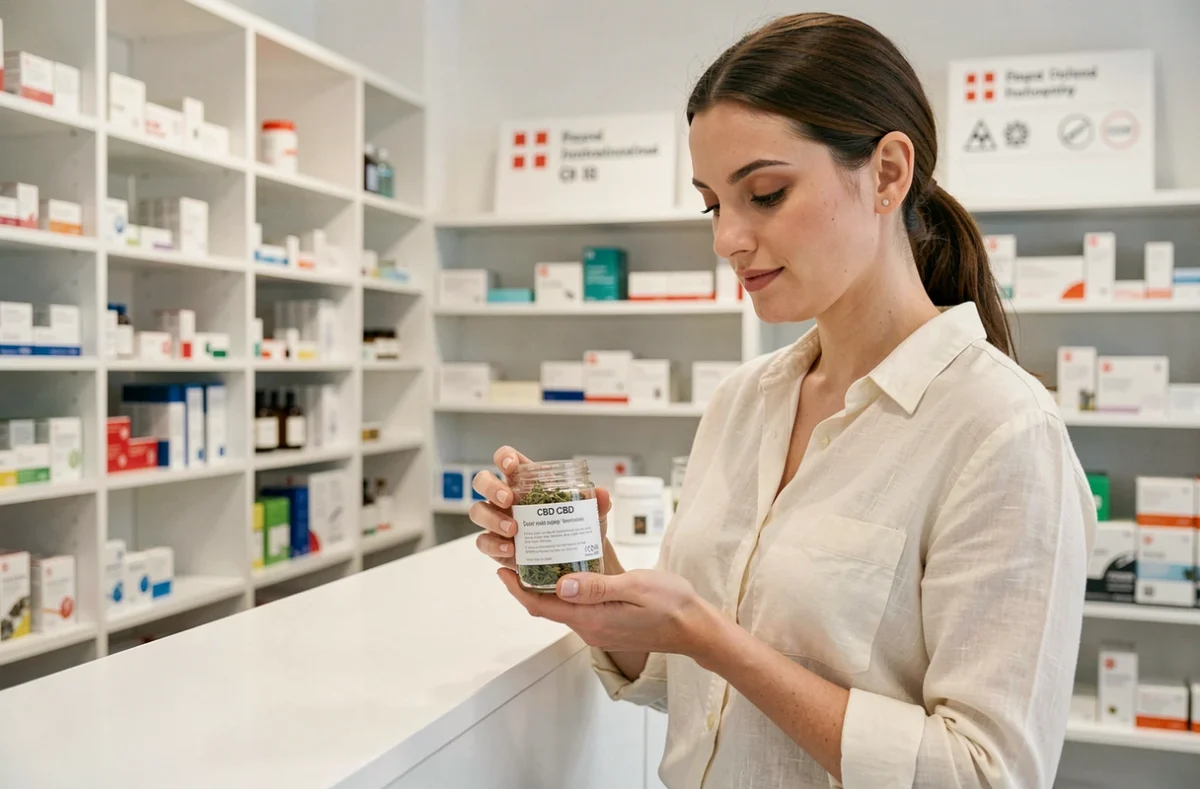
CBD is legal in Switzerland, but not all products sold under this label are equal in terms of regulations. Between the THC threshold specific to the Swiss market, the categories of products subject to distinct authorizations, and the pitfalls related to health claims, purchasing CBD in Switzerland requires checking several parameters before placing an order.
Regulatory category of CBD products: the criterion that buyers overlook
Most guides focus on the THC level. This is necessary but insufficient. In Switzerland, the category under which a CBD product is marketed determines the seller’s obligations and the guarantees for the buyer.
A CBD oil sold as a cosmetic does not follow the same rules as an oil presented as a dietary supplement. Food products containing CBD may fall under the regime of novel foods, which requires specific authorization and safety evaluation by the competent authorities. A product displayed on the shelf does not prove that it has obtained this authorization.
Before buying CBD in Switzerland, always check under which category the seller markets their product. If the mention is absent or vague, it is a warning signal.
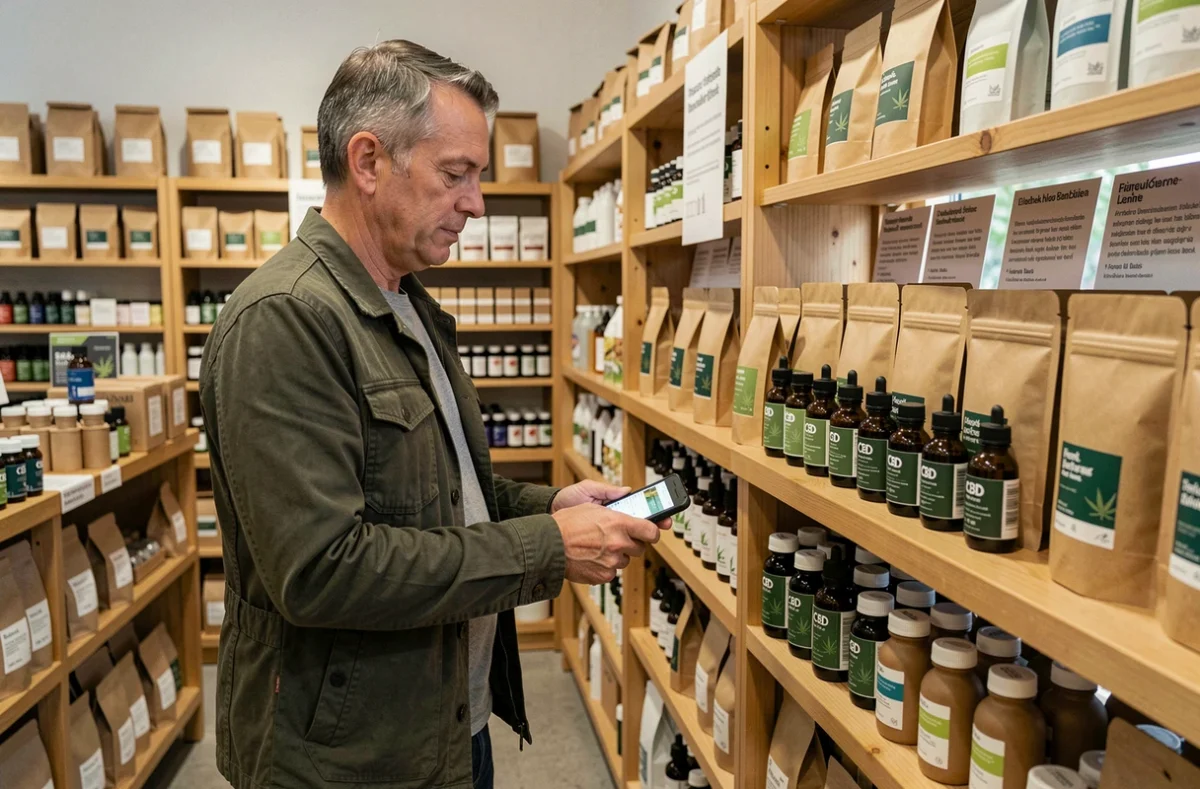
THC threshold in Switzerland and France: comparative table
The difference in thresholds between Switzerland and the European Union is the main source of confusion for consumers, especially those residing in France or traveling between the two countries.
| Criterion | Switzerland | France / EU |
|---|---|---|
| Maximum allowed THC level | less than 1% | less than 0.3% |
| CBD flowers allowed for sale | Yes | Yes, under conditions |
| Customs clearance with Swiss CBD | Free within Swiss territory | Risk of seizure if the product exceeds 0.3% THC |
| Therapeutic claims on packaging | Prohibited without medicinal authorization | Prohibited without medicinal authorization |
A CBD product that is perfectly legal in Switzerland can therefore be non-compliant as soon as it crosses the French border. The THC level stated on the certificate of analysis is the document to consult, not the marketing label.
Health claims about CBD: spotting non-compliant sellers
A seller who promises that their CBD oil “cures insomnia” or “treats anxiety” is operating outside the legal framework. No over-the-counter CBD product can claim a therapeutic effect without having been evaluated and authorized as a medicine. This principle applies in Switzerland as well as in the European Union.
The Federal Office of Food Safety and Veterinary Affairs (OSAV) reminds that the marketing of novel foods, including those containing CBD, is subject to authorization and safety evaluation. A site that makes multiple healing promises without mentioning a specific regulatory framework sells a narrative, not a reliable product.
Three concrete checks before a purchase
- The seller displays a certificate of analysis (COA) conducted by a third-party laboratory, mentioning the exact THC and CBD levels of the batch in question
- The regulatory category of the product is clearly indicated (cosmetic, tobacco substitute, authorized food product)
- No direct therapeutic claims appear on the product sheet or packaging
The absence of any of these elements justifies moving on to the next seller.
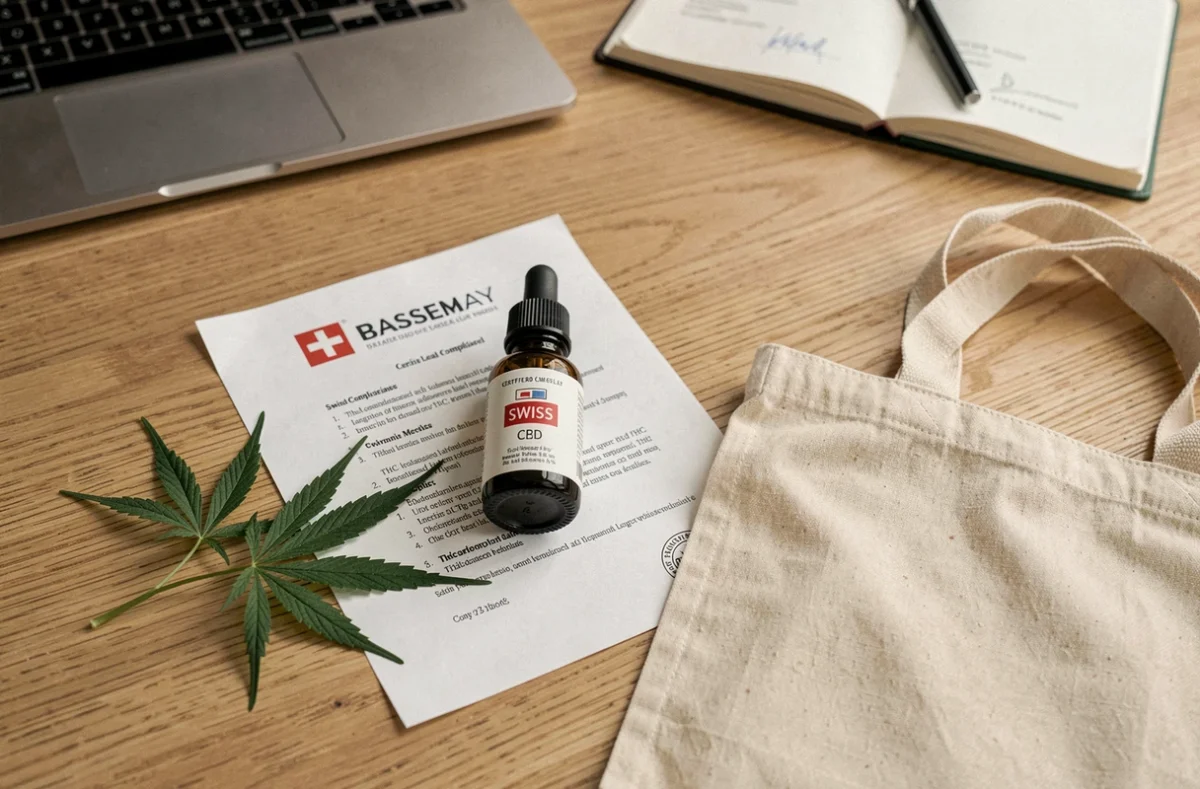
Quality of Swiss CBD: what the cultivation method really changes
Swiss hemp benefits from a higher THC threshold, allowing growers to work with varieties that are genetically richer in cannabinoids and terpenes. A more complete aromatic profile does not guarantee a better effect, but it indicates a less processed product.
The cultivation methods, indoor, greenhouse, or outdoor, influence the density of the flowers, their terpene content, and their price. Indoor cultivation offers maximum control over conditions (light, humidity, temperature), while outdoor depends on climatic uncertainties but reduces production costs.
Supercritical CO2 extraction and purity
For oils and extracts, the extraction process is as important as the raw material. Supercritical CO2 extraction allows for a residue-free extract, with a preserved cannabinoid profile. Other, less expensive methods use chemical solvents that can leave traces in the final product.
A complete certificate of analysis mentions not only the THC and CBD levels but also the absence of heavy metals, pesticides, and residual solvents. This document remains the only objective quality indicator, regardless of price or packaging.
Swiss CBD and customs: what regulations say at the borders
Traveling with CBD purchased in Switzerland to France or another EU country exposes one to customs control. A product compliant in Switzerland can be seized at the French border if its THC level exceeds 0.3%.
Customs officers do not always have a quick test to distinguish CBD from regular cannabis by smell or appearance. Keeping the certificate of analysis and the purchase invoice reduces the risk of misunderstanding, though it does not eliminate it entirely.
- Prefer products whose THC level complies with the threshold of the destination country, not just the Swiss threshold
- CBD flowers, visually identical to recreational cannabis, are the most likely to pose problems during a check
- Oils and cosmetics, packaged in identifiable bottles, generally pass through checks more easily
The Swiss framework for foodstuffs and hemp-based products is subject to regular adaptations. Before any purchase, verifying the official information corresponding to the exact category of the product remains the most reliable approach to avoid an unpleasant surprise, both in Switzerland and at the border.