
Regional information relies on a network of local sources, transport networks, and cultural or political events that renew every week. Keeping up with the news in your region means knowing where to look, what to verify, and how to prioritize sometimes contradictory information streams.
Signaling and work on the RER D: what changes with the modernization in autumn 2026
Major railway construction projects are often an underestimated source of regional news. In autumn 2026, SNCF Réseau will replace eight switches between Stade de France-Saint-Denis and Creil. These new facilities will include fault detection sensors, a system aimed at reducing recurring breakdowns on this line.
The scheduled interruptions on certain weekends in October are therefore not just routine maintenance. This is a modernization operation of the signaling system, with a direct impact on the daily journeys of thousands of users in Île-de-France.
This type of technical information is rarely covered by mainstream media. Checking the latest news from the region helps identify these disruptions before they disrupt a professional or personal trip.
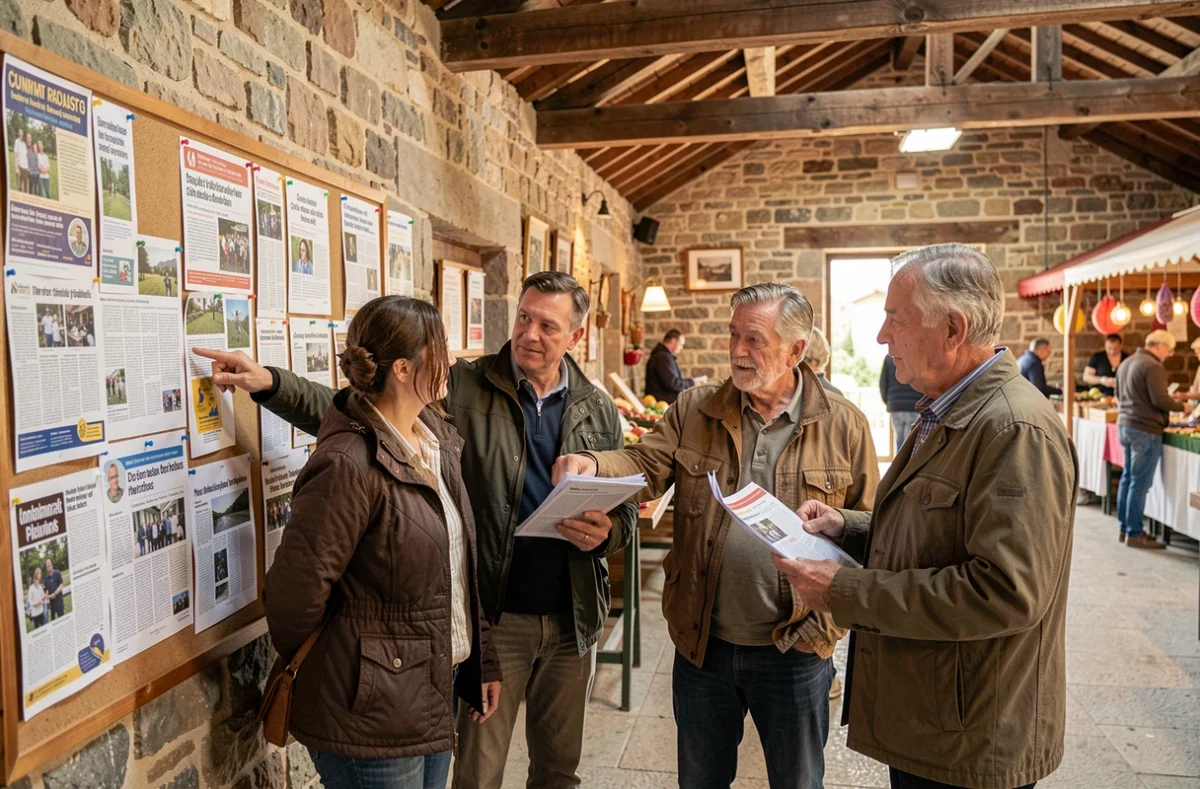
Rurality 2030: the regional roadmap for isolated municipalities
Regional news is not limited to metropolitan areas. The Rurality Conference on October 14, 2026, resulted in the presentation of Rurality 2030, a strategy supported by the Region and aimed at municipalities in the outer suburbs.
The announced guidelines target four priority areas:
- Access to healthcare, with the planned deployment of medibuses in each outer suburb department to address medical desertification
- Soft mobility and transport links to employment hubs, a recurring issue in Val-de-Marne and Seine-Saint-Denis
- Maintaining local shops and essential public services in rural towns
- Access to culture and sports facilities, often concentrated in urban centers
This roadmap reflects a documented observation: important services are declining in areas far from major train stations. Following this issue in the coming months will allow for an assessment of whether commitments materialize beyond the announcements.
Transport disruptions in Île-de-France: check beyond RATP and SNCF
When discussing disruptions in Île-de-France transport, the reflex is to consult RATP or SNCF alerts. This habit leaves a blind spot: local bus networks, managed by different operators, also experience interruptions that go under the radar of mainstream applications.
Sports events and traffic restrictions
Disruptions do not only stem from strikes or construction work. Sports events organized in Paris cause road closures and interruptions of metro lines during time slots that are sometimes poorly anticipated by users. Some Sundays in October, major routes are cut off without sufficient prior information circulating.
The reflex to adopt: cross-check at least three sources (local operator’s website, regional media, navigation app) before an unusual trip.

Social mobilizations and law enforcement: reading local news with perspective
The day of October 17, 2026, illustrates the complexity of real-time information. An authorized procession starting from Place de la République in Paris, tensions by midday, a water cannon used: the reported facts vary depending on the source consulted.
Some media focused on the damage caused on the sidelines of the official route, while others highlighted questions about the proportionality of the police response.
Reading regional news with discernment requires distinguishing three levels of information:
- The raw facts (times, routes, estimated number of participants by the prefecture)
- Field testimonies, useful but partial by nature
- Analyses published in the following days, which provide context to the events with greater perspective
A reader who only consults a single continuous news feed risks confusing the chronology of events with their significance. Diversifying regional sources remains the best filter against distortion.
Prioritizing your regional information sources online
Continuous news portals (Le Parisien, France 3 Régions, ICI) publish dozens of articles each day. This abundance creates a paradox: the denser the flow, the harder it becomes to spot what truly matters for your municipality or department.
Some criteria allow for effective sorting. First, check if the article mentions an identifiable institutional source (prefecture, local authority, transport operator). Next, distinguish factual briefs from analytical articles, which require a longer production time but provide real added value.
Finally, local newsletters and regional media accounts on social networks offer a useful complement to news sites. They often highlight cultural events, public service closures, or roadworks that escape national newsrooms.
Regional news is not consumed like a television news broadcast. It is built through the accumulation of weak signals, cross-verified information, and regular attention to local sources. This habit makes the difference between an informed reader and an overwhelmed reader.