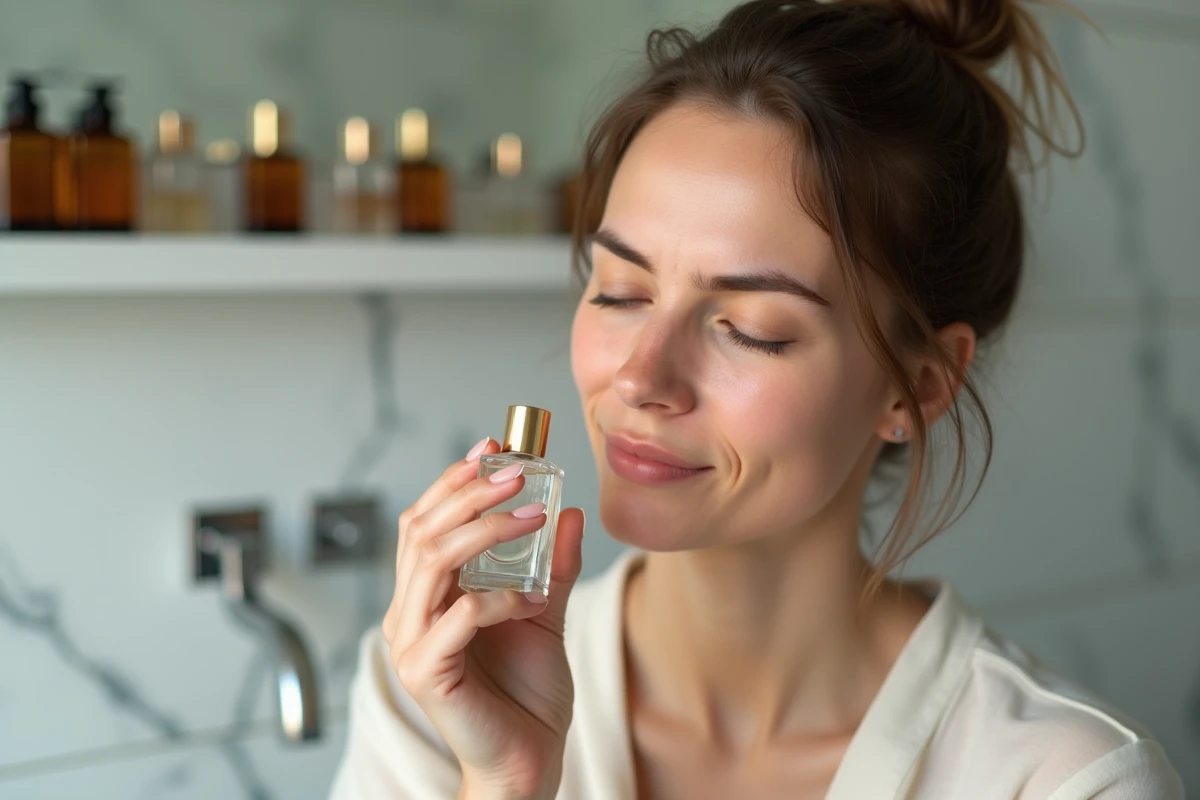
The label “suitable for sensitive skin” on a bottle guarantees nothing. The skin tolerance of a fragrance depends on its complete formulation, not on a marketing claim. Choosing a fragrance for sensitive skin requires reading the INCI list, understanding the role of each solvent, and reconsidering application areas.
Decoding INCI of fragrances: the molecules that trigger irritation
We observe in formulation that skin reactivity to fragrance almost never comes from the fragrance itself, but from its vehicle. Denatured alcohol (alcohol denat.) remains the primary irritant in the majority of conventional perfumes. It dehydrates the stratum corneum, weakens the lipid barrier, and facilitates the penetration of allergens into the epidermis.
Regulated fragrance allergens (linalool, limonene, citronellol, geraniol, coumarin) appear at the end of the INCI list when their concentration exceeds a threshold. Their presence does not automatically mean a reaction, but it serves as a warning signal for anyone who has previously experienced contact eczema.
A point often overlooked by mainstream articles: products labeled “fragrance-free” may contain isolated odor molecules (some botanical extracts) that can cause silent inflammation. The absence of the word “Fragrance” or “Perfume” on the label is not an absolute guarantee. We recommend checking the entire INCI list, not just the “Fragrance” line.
Anyone sensitive to fragrance on Miss Marion will find additional insights on this link between formulation and skin comfort.
Alcohol-free formats for sensitive skin: gel, stick, and solid perfume
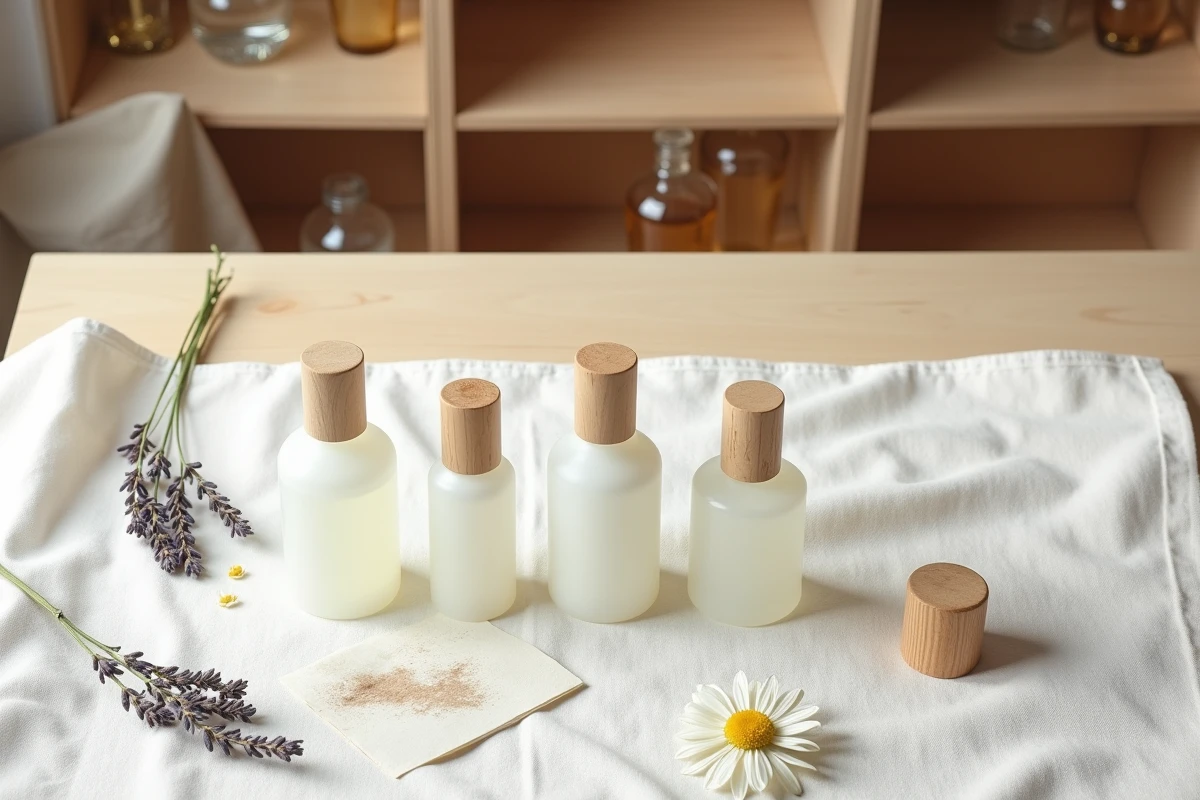
The classic spray bottle is not the only fragrance delivery method. Several recent formats deserve the attention of reactive skin, as they eliminate or drastically reduce alcohol while maintaining a discernible trail.
- Fragrance gel replaces alcohol with a water-based gelled base. Dolce&Gabbana, for example, markets a “Perfume Gel” from its Dolce line, positioned as suitable for sensitive skin. The diffusion is softer, and the trail is closer to the body.
- Solid perfume, formulated on a base of plant butters (shea, cocoa) and waxes, acts as an occlusive treatment while providing fragrance. These hybrid “treatment + perfume” formats limit skin dryness and are suitable for dry and reactive skin.
- The scented stick works on the same principle as the solid, with a more localized application. The fragrance concentration is often lower, which reduces exposure to allergens per unit area.
The downside of these formats: the longevity and projection are lower than those of an alcoholic spray. The fragrance remains more intimate, more discreet. For some people, this is an acceptable compromise. For others, it is a drawback.
Application areas for fragrance on reactive skin: where to spray without risk
The neck and wrists are the two most reactive areas and most exposed to the sun. Applying a fragrance containing alcohol on these classic pulse points multiplies the risk of irritation and pigmentation spots (photosensitization).
The alternatives are known to perfumers but rarely communicated to the general public:
- Spray on clothing rather than on the skin. Textile fibers retain base notes (woods, musks, amber) well and diffuse a lasting trail without skin contact.
- Apply to hair, at a distance, with a dedicated hair mist or a light veil. Hair captures volatile molecules and releases them with movement.
- Target the crease of the elbow or the back of the knee, areas less exposed to UV and less prone to sweating than the neck.
A preparatory step also changes the game: hydrating the skin with a fragrance-free cream before application creates a protective barrier. The lipid film limits direct contact between irritating molecules and the epidermis while improving the longevity of the trail.

Fragrance families and skin tolerance: which notes to prioritize
Not all fragrance families have the same tolerance profile. Hesperid notes (bergamot, lemon, grapefruit) contain naturally photosensitizing furocoumarins. Even in an alcohol-free format, a high concentration of citrus in the top notes can cause reactions on sun-exposed skin.
Oriental and woody compositions, built around base notes (sandalwood, vetiver, vanilla, white musks), pose fewer photosensitization issues. Their slow evaporation also limits the peak concentration of volatile allergens at the time of application.
White florals (jasmine, tuberose, lily of the valley) offer a good compromise between olfactory richness and tolerance, provided that the absence of high concentrations of linalool is verified. Synthetic jasmine (hedione) is generally better tolerated than natural jasmine absolute, which is richer in allergenic compounds.
Choosing a fragrance for sensitive skin is not just about ticking “alcohol-free” or “hypoallergenic.” The fragrance remains a sensory pleasure, and renouncing the complexity of a composition is not mandatory. What matters is mastering three variables: the vehicle (alcohol or alternative), the application area, and the allergenic profile of the dominant notes. With these guidelines, care and trail cease to oppose each other.