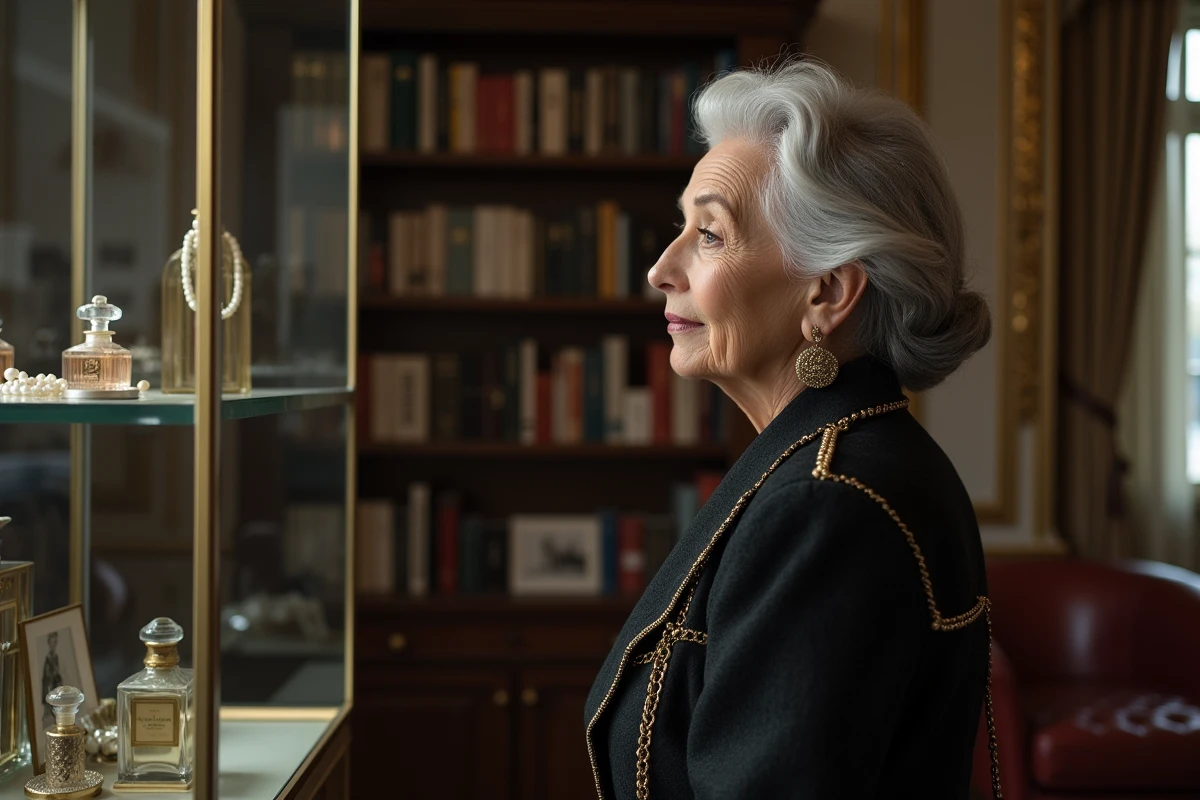
Gabrielle Chanel died on January 10, 1971, at the Ritz in Paris. At that time, she no longer owned the fashion house that bears her name. The confusion between the personal assets of the designer and the capital control of the Chanel company still fuels persistent misconceptions. Understanding who actually inherited requires distinguishing between two flows: the private assets passed down by will and the ownership of the company, locked in well before her death.
Wertheimer-Chanel Agreement: The Loss of Capital Control Before the Succession
The capital chronology is the blind spot of most narratives about the Chanel inheritance. Gabrielle Chanel sold her fashion house to Pierre Wertheimer as early as 1954, following an agreement dating back to the 1920s regarding the Chanel Perfumes company. This transfer of ownership means that the designer’s death had no legal effect on the control of the brand.
The association between Chanel and the Wertheimer family began with the launch of perfume N°5. Pierre Wertheimer then obtained the majority of the capital of the perfume company. The following decades were marked by contractual tensions, renegotiations, and ultimately the complete transfer of the couture business. When Gabrielle passed away, the Wertheimer family already owned the entire company.
We observe here an atypical pattern in the history of French luxury: the founder herself organized, during her lifetime, the separation between her name and the capital of the company. This is far from the classic dynastic model where a founder passes shares and management to their descendants. This is a point that anyone interested in the fortune and legacy of Coco Chanel should keep in mind to avoid misunderstandings.
Gabrielle Chanel’s Will: Personal Assets, Not an Empire

The precise content of Gabrielle Chanel’s will remains largely unpublished. However, available biographical works indicate that she bequeathed her personal belongings (jewelry, furniture, artworks, cash) to a small circle of close collaborators and charitable institutions.
No direct descendant ever inherited the Chanel brand. Gabrielle had no children. Her nephews and nieces do not appear as major beneficiaries in documented biographical accounts. The will concerns a liquid and real estate personal estate, not the future value of a brand estimated today at several tens of billions.
A frequently cited case in the press is that of her butler, mentioned in a Le Monde article as early as 1973, who was among the legatees. This detail illustrates Gabrielle Chanel’s logic: rewarding the loyalty of her immediate circle rather than following a lineage transmission.
What the Will Did Not Contain
- No shares of the Chanel company, already fully owned by the Wertheimers
- No clause for creative control or oversight over the artistic direction of the house
- No transfer of rights over perfume N°5, whose intellectual and commercial property belonged to the Chanel Perfumes company
Gabrielle’s personal fortune at the time of her death, although substantial, represented a fraction of the overall value of the Chanel empire. The inheritance passed down by will concerned personal assets, not the brand.
Wertheimer Family: Owners of Chanel for Three Generations
The Wertheimer family has controlled Chanel without interruption since the initial agreement with Gabrielle. After Pierre Wertheimer, his son Jacques took the reins. Then Alain and Gérard Wertheimer run the company and develop it on a global scale, while maintaining a rare level of discretion in the luxury sector.
The Chanel company is not publicly traded. It has only published its financial results late compared to other major houses. This structural opacity is a deliberate choice by the family, which operates through holdings and a family office, Mousse Partners, based between New York, Paris, and Geneva.
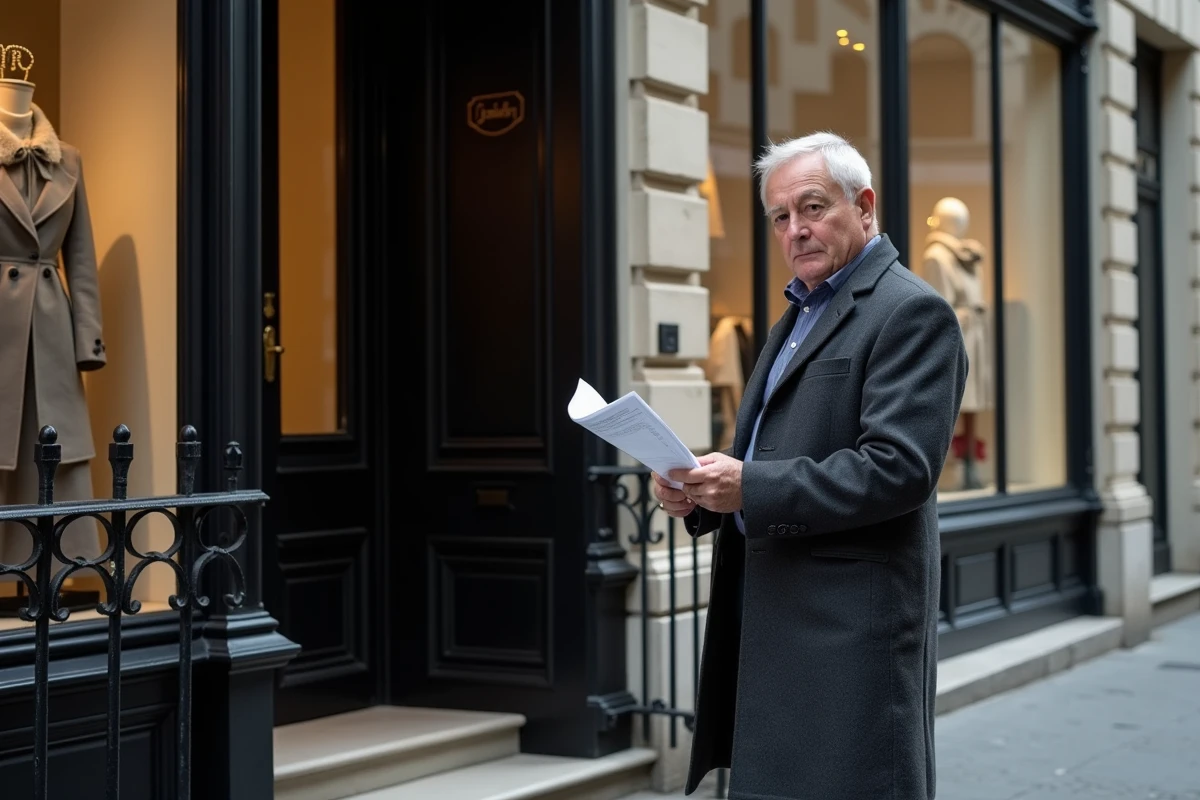
According to Fashion Network, the next generation is being prepared with Arthur Heilbronn, a descendant of the Wertheimer family, a graduate of Harvard Business School and a former Goldman Sachs employee. He has joined Mousse Partners and now oversees investments in real estate, banking, and media. His recent accession to the board of one of the family office’s main portfolio companies signals an ongoing generational transition.
Ownership Structure and Governance
- Chanel is owned through private entities controlled by the Wertheimer branch, with no external shareholders
- Mousse Partners manages family investments beyond the Chanel perimeter (real estate, financial holdings, media)
- The operational management of Chanel is entrusted to professional managers, while the family retains strategic governance
This model resembles other French luxury dynasties, but with one peculiarity: the Wertheimers have never been creators. Their role is that of investors and wealth managers. The artistic direction has been delegated, first to Gabrielle herself (until 1971), then to Karl Lagerfeld for over thirty years, and now to Virginie Viard and her successors.
Chanel Legacy: Financial Heritage vs. Creative Legacy
The question “who inherited Chanel” thus calls for a dual answer. From a capital perspective, the Wertheimer family inherited nothing in the legal sense: they already owned the company. From a testamentary perspective, the legatees are close associates and charitable organizations, not industrial heirs.
The creative legacy of Gabrielle Chanel has never been the subject of a notarized act. It is transmitted through stylistic codes (tweed, gold chain, camellia, two-tone) that each artistic director reinterprets. Karl Lagerfeld transformed this aesthetic heritage into a global commercial machine, without ever holding any shares of the capital.
The Chanel case remains an anomaly in French luxury. The founder lost economic control of her own house during her lifetime while remaining its creative face until her death. The true owners have never borne the name Chanel. And the testamentary legatees have never had any connection to the company. Three distinct lines, often confused, which explain why this question continues to generate so many misunderstandings.