When searching for Pietra d’Alba on a map, one encounters a concrete problem: this village does not exist as a registered Italian municipality. The name comes from the novel Veiller sur elle by Jean-Baptiste Andrea, who imagined this place in a fictional Ligurian hinterland. However, several websites locate it in Piedmont, near Alba, treating it as a real tourist destination. Before planning anything, this distinction changes the entire approach to the trip.
Pietra d’Alba on the map: a fictional place rooted in imaginary Liguria

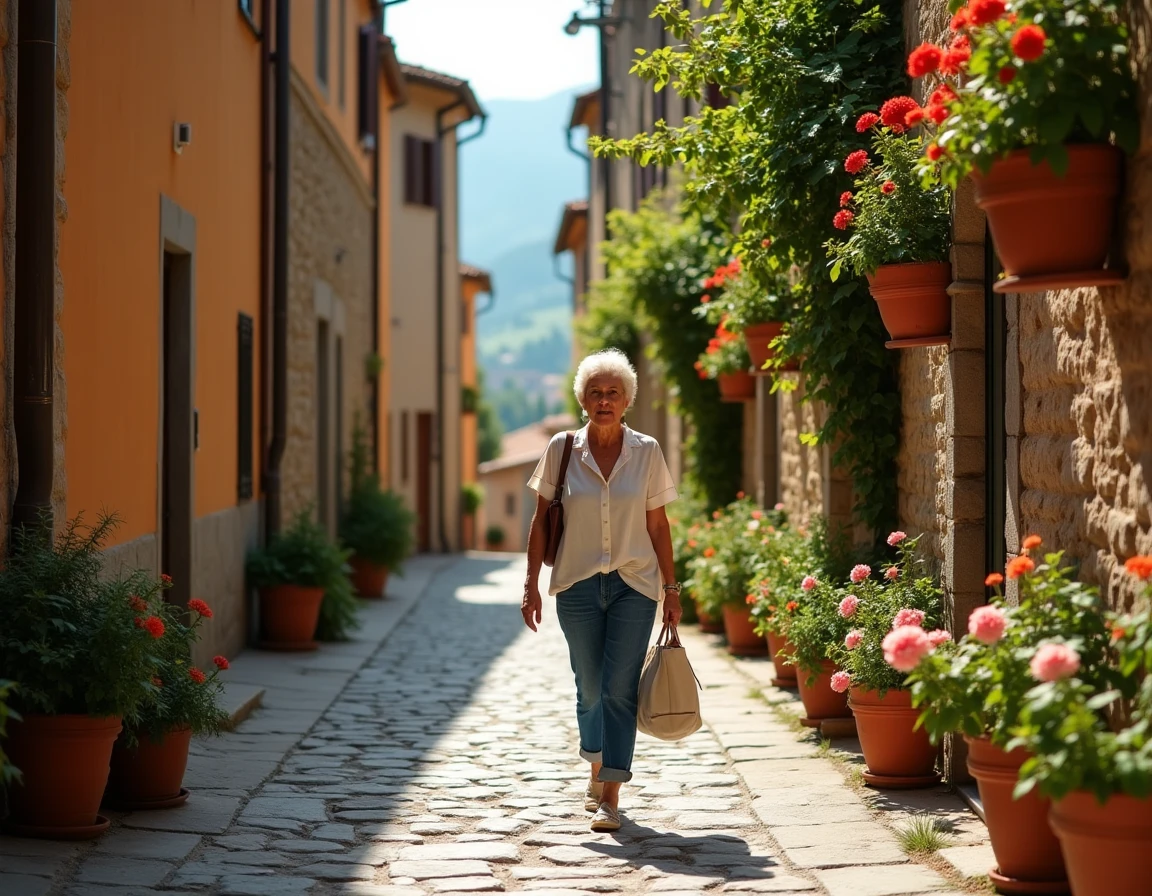
The trap is common. One types “Pietra d’Alba Italy” and dozens of pages offer itineraries, restaurants, accommodations. The setting described by Jean-Baptiste Andrea is inspired by an interior Italy, with perched villages, narrow alleys, and an atmosphere of a Ligurian town close to the French border.
The author never placed Pietra d’Alba in the Langhe or in the province of Cuneo. The fictional setting blends Liguria and Mediterranean hinterland, with dry hills, light stones, and a brightness that evokes more of the western Riviera than the Piedmont mists. It is a literary backdrop of memory, crossed by fascism and fictional characters, not a travel guide.
For those wanting to explore the landscapes that may have inspired the author, one can consult the map of Pietra d’Alba in Italy to better understand the regions associated with this name.
Editorial confusion between Alba, the Langhe, and Pietra d’Alba
The city of Alba does indeed exist. It is located in Piedmont, in the heart of the Langhe hills, and is a real destination with a strong identity. The problem arises when web content merges Alba (the city) and Pietra d’Alba (the fictional village) without distinction.
Specifically, articles that talk about white truffles, Barolo, tajarin, or IGP hazelnuts from Piedmont describe Alba and its region, not Pietra d’Alba. The two have no geographical or administrative link. The phonetic proximity between “Alba” and “Pietra d’Alba” has generated a chain of editorial errors repeated from one site to another.
This phenomenon is not trivial for travelers. One prepares a stay thinking of visiting a specific village, books accommodation in the Langhe, and discovers on-site that no sign, no road leads to Pietra d’Alba. Feedback varies on this point, with some visitors ultimately appreciating the discovery of Alba itself, while others feel misled by the content read beforehand.
Visiting the Alba region in Piedmont: what is worth the trip
If Pietra d’Alba remains a fictional place, the region surrounding Alba is well worth the visit. We are talking about a vibrant terroir, set in a landscape of vineyards classified as a UNESCO World Heritage site.
Here’s what distinguishes this area for a traveler arriving with a map in hand:
- The vineyards of the Langhe: hills planted with nebbiolo, the grape variety of Barolo and Barbaresco, accessible via winding roads between the perched villages of the province of Cuneo.
- The white truffle of Alba: the annual fair attracts visitors from around the world. Outside of the season, local truffle hunters offer forest outings with their dogs.
- The architectural heritage of Alba: medieval towers, cathedral, cobbled streets. The historic center can be explored on foot in a few hours, with stops at artisan botteghe.
- The neighboring Ligurian hinterland: for those seeking the atmosphere described in the novel, the Ligurian coast and its inland villages (not far to the south) offer landscapes of light stone and scrubland that align more closely with the fictional setting.
Reading a map of Piedmont and Liguria: practical landmarks for the field
On a map, Alba is located in the southern Piedmont, halfway between Turin and the Ligurian coast. The city is surrounded by the Langhe hills to the south and the Roero to the north, separated by the Tanaro River.
When preparing an itinerary in this area, a few landmarks help with orientation:
- Alba is accessible from Turin via a road that crosses the Roero, with landscapes that change dramatically in less than an hour.
- The border with Liguria is to the south. The passes connecting Piedmont to the coast go through narrow valleys where the landscape shifts from continental vineyards to Mediterranean vegetation.
- The perched villages of the Ligurian hinterland (to the west, towards the French border) correspond more to the imagination of Pietra d’Alba than the wine villages of the Langhe.
For a traveler wishing to combine both atmospheres, a route starting from Alba to the south allows for a transition from Piedmont vineyards to Ligurian olive groves in a day’s drive.
Novel and literary tourism: Pietra d’Alba as a starting point
The success of Veiller sur elle has created a phenomenon of literary tourism around a place that does not exist. This is not an isolated case in Italy, where fiction has often inspired real destinations.
Searching for Pietra d’Alba is, in reality, searching for a village Italy, that of stone villages, shaded squares, and panoramas over cultivated hills. This Italy exists, but it does not bear this name. It can be found in the villages of inner Piedmont, in the hinterland of Savona or Imperia, in the heights above the Riviera del Ponente.
Andrea’s novel situates its narrative in an era marked by fascism and collective memory. The described landscapes, with their light stones and steep paths, refer to real places scattered between Liguria and Piedmont, without any being “the” Pietra d’Alba.
Rather than searching for a specific point on the map, one benefits from exploring the area between Alba and the Ligurian coast, accepting that the village in the novel remains what it has always been: a fictional place that inspires a desire to traverse a very real region.