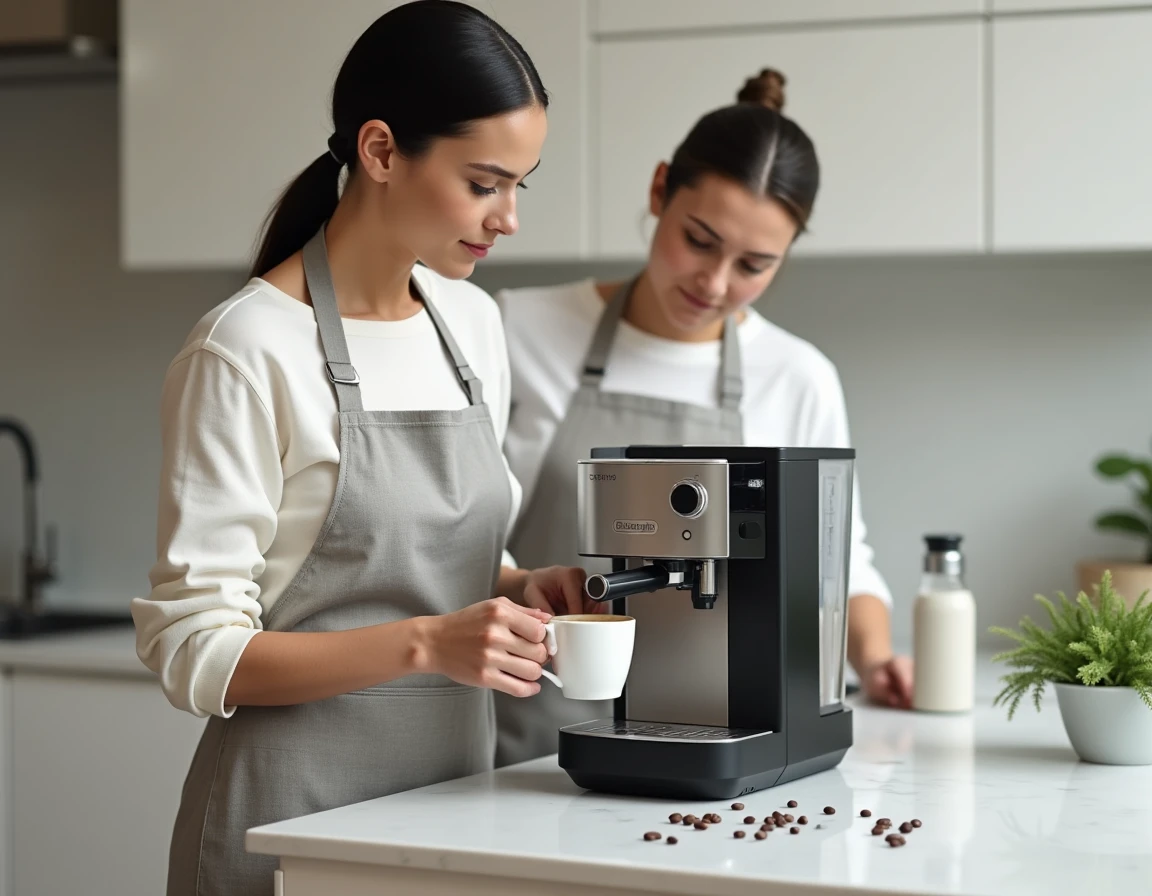
The Magnifica S delivers a decent espresso right out of the box, but the cappuccino requires adjustments that the DeLonghi manual does not detail. Grind size, extraction temperature, steam wand technique: each parameter alters the final texture in the cup. Here we detail the precise settings and recurring mistakes that separate a flat cappuccino from a textured result.
Grind Size and Temperature on the Magnifica S: The Duo That Controls Bitterness
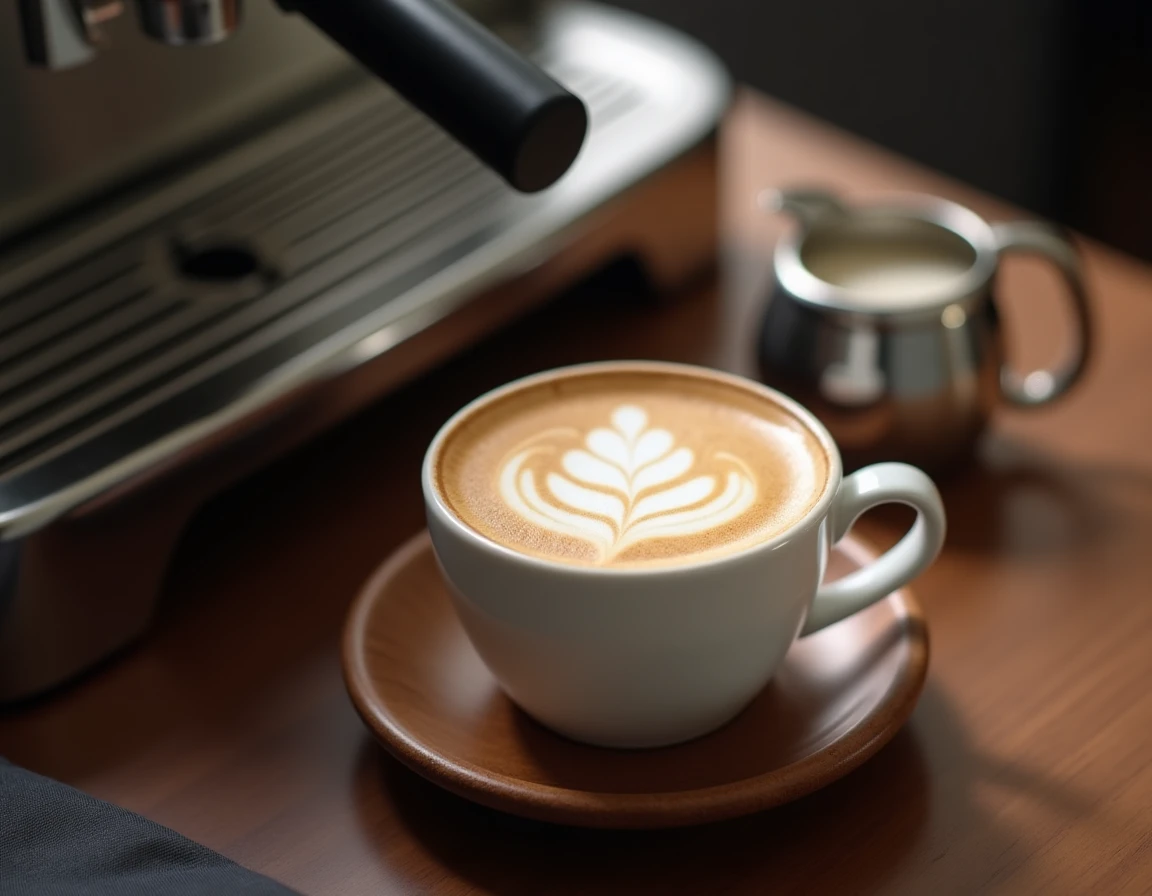
On a machine with a built-in grinder, the grind size directly controls the contact time between the water and the ground coffee. A grind that is too fine increases the bitterness of the espresso, which throws off the cappuccino once the milk is added. The common reflex is to push the grinder to the finest setting to achieve a “stronger” coffee. This is a mistake.
We recommend setting the grind dial one or two notches above the finest setting. The extraction will be slightly shorter, the body will remain dense, but the bitter notes will recede. This setting is particularly suitable for beans intended for a cappuccino, where the milk should reveal the coffee’s aromas without being masked by astringency.
The temperature parameter plays a complementary role. A moderate extraction temperature produces a smoother espresso, better suited for blending with milk. On the Magnifica S, the menu allows you to choose from several levels. For a cappuccino, the intermediate level yields the best results. The maximum level is more suitable for a black espresso, where one seeks raw intensity.
Before adjusting these settings, it is important to know that the grind dial should only be turned when the grinder is running. Forcing the dial while stopped can damage the burrs.
Those who wish to prepare a cappuccino with a DeLonghi Magnifica S following a complete protocol will find these parameters crucial for the final quality.
Roasting Coffee Beans: Choosing a Profile Suitable for Cappuccino

Beans sold in supermarkets are often dark roasts, designed for a classic Italian espresso. In cappuccino, this profile poses a problem: the burnt notes and heavy body of the coffee disappear under the milk foam, leaving only a residual bitterness without aromatic complexity.
A medium roast offers a better balance in cappuccino on an automatic machine. The fruity or chocolatey aromas remain perceptible after the addition of milk. The body is sufficient to mark the drink without overwhelming the texture of the foam.
Here are some guidelines for choosing beans:
- Arabica-robusta blends with a dominant arabica work well: robusta adds crema, while arabica provides the aromatic palette.
- Beans roasted more than three months ago lose freshness and produce a fine, almost nonexistent crema, which harms the cappuccino’s structure.
- Specialty coffees with light roast often lack body to hold up against the milk volume of a cappuccino.
Steam Wand Technique: Pressure, Angle, and Milk Texture
The Magnifica S features a manual steam wand (pannarello on some versions). The quality of the foam entirely depends on the technique and positioning of the pitcher.
Purging the Wand Before Each Use
Opening the steam for one to two seconds into an empty container eliminates the condensed water in the circuit. Without this purge, the first seconds inject lukewarm water into the milk, diluting the foam and preventing the formation of microbubbles.
Position of the Pitcher and Depth of the Wand
The wand should just touch the surface of the milk, not dive to the bottom of the pitcher. The tip remains a few millimeters below the surface to incorporate air during the first seconds (aeration phase). Then, slightly submerge the wand to create a vortex that breaks the large bubbles and homogenizes the texture.
An appropriately sized stainless steel pitcher facilitates control. Filling the pitcher one-third full is sufficient: the milk nearly doubles in volume during emulsification. Using well-chilled whole milk straight from the refrigerator yields the best results. The fat in the milk stabilizes the foam, and the low temperature allows more working time before the milk exceeds the threshold where the proteins denature.
When to Stop the Steam
The hand placed under the pitcher serves as a thermometer. When the stainless steel becomes too hot to maintain contact, the milk has reached the critical zone. Beyond that, the foam loses its velvety texture and turns cardboard-like. Overheated milk no longer froths properly and develops an artificial sweet taste that masks the coffee.
Cleaning the Milk Circuit and Degreasing the Coffee Group
The Magnifica S does not have an automatic degreasing program for the coffee circuit. Coffee oil residues accumulate in the brewing group and alter the taste of the extraction after a few weeks of use. These deposits accentuate bitterness and give a rancid aftertaste to the cappuccino.
The maintenance protocol includes several complementary actions:
- Remove the brewing group weekly, rinse it with clear water without soap, and let it dry completely before reinserting it.
- Use degreasing tablets suitable for automatic machines once a month, following the manual cleaning cycle described in the manual.
- Clean the steam wand immediately after each use: a damp cloth on the outside, then a two-second steam purge to expel milk residues from the internal conduit.
- Descale the machine as soon as the indicator lights up, without postponing the operation. Limescale reduces the boiler pressure and weakens the steam, which directly degrades the quality of the foam.
Milk dried in the wand is the primary cause of poor foam on the Magnifica S. Two hours is enough for the proteins to form a partial clog that reduces steam flow. Maintaining this component conditions the consistency of the cappuccino much more than the choice of beans or grind settings.