Between trains, carpooling, and planes, buses remain the mode of transport with the least understood cost-comfort ratio. The price differences with other options are clear, but travel conditions vary just as much from one operator to another. Traveling by bus requires knowledge of a few variables that ticket comparison sites do not show: baggage limits, driver break times, actual vehicle accessibility.
Bus, train, carpooling, and plane: cost and constraint comparison by route
The ticket price alone is not enough to differentiate transport modes. Additional costs (extra baggage, meals, parking) alter the final bill.
| Criteria | Bus / Coach | Train | Carpooling | Plane |
|---|---|---|---|---|
| Average price per trip | The lowest on most routes | Variable, frequent promotions but high full fare | Intermediate, depends on the driver | Competitive on long distances if booked in advance |
| Baggage included | Often one checked bag + one carry-on, but conditions vary greatly by carrier | No strict limit in general | Limited to the vehicle’s trunk | Frequent surcharge for checked baggage |
| Travel duration | Longer (roads, intermediate stops) | Fast on high-speed lines | Variable depending on the driver’s route | Short, but airport time must be added |
| Accessibility for PRM | Not systematic, to be confirmed before purchase | Dedicated spaces on most trains | Almost non-existent | Assistance mandatory upon request |
| Logistical stress | Low if arriving early at the departure point | Moderate (station in city center) | High (variable meeting point) | High (checks, outlying airport) |
This table shows that buses excel in price but fall short in duration and guaranteed accessibility. Carpooling, often presented as the cheapest alternative, generates higher logistical stress than buses. Platforms like voyagenbus.com allow for centralized comparison of offers and filtering results based on these criteria.
Baggage limits on buses: gaps that weigh on the budget
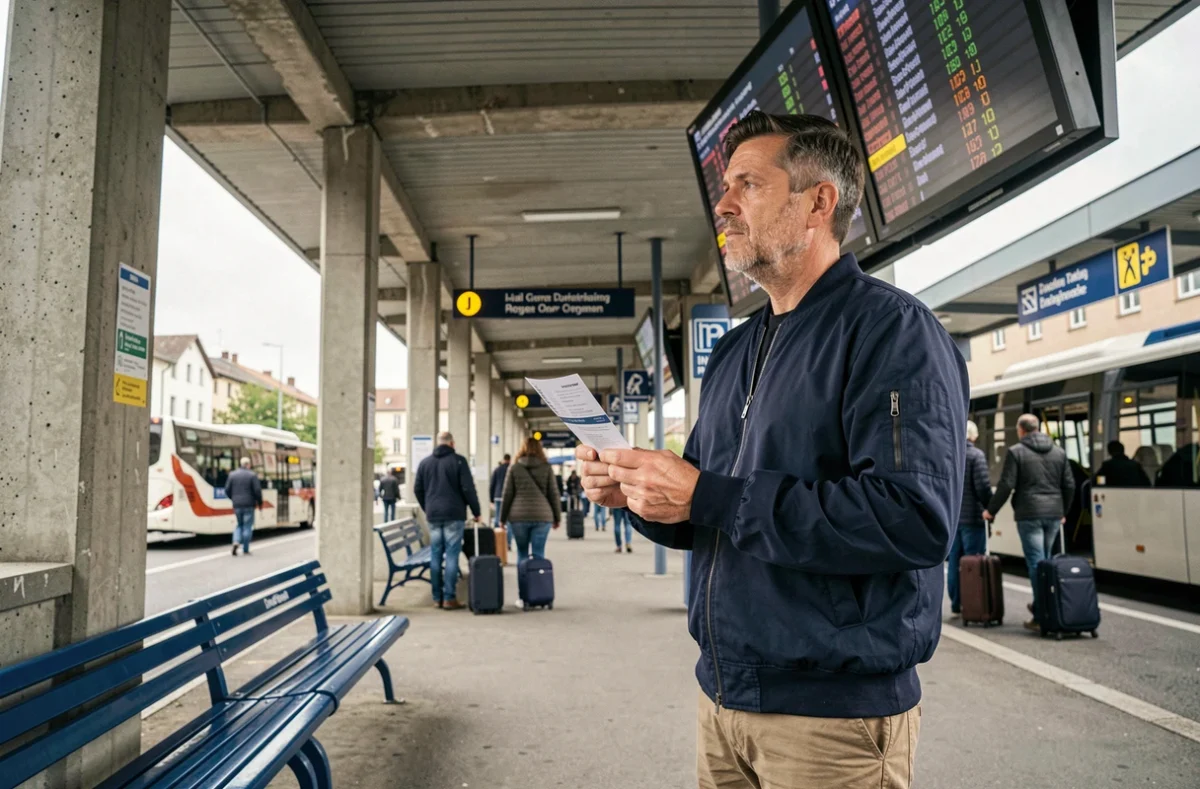
Competitors almost never address the baggage issue from a financial perspective. Conditions vary greatly from one carrier to another: some charge for a second checked bag at the time of booking, while others impose penalties at boarding.
Before purchasing a ticket, three checks can avoid unpleasant surprises:
- The number of bags included in the base fare (checked and carry-on), often indicated in the general conditions and rarely on the results page
- The dimensions and maximum weight allowed per bag, which differ by route and company
- The cost of extra baggage reserved online compared to the fee applied at departure, sometimes significantly higher
A round trip with an unplanned bag can negate the savings compared to the train. Checking baggage conditions before purchase protects the bus’s price advantage.
Driving time and regulatory breaks: what the night traveler needs to know
Traveling overnight by bus is often recommended to save on a hotel night. This logic is sound, but it relies on a fragile assumption: that the journey proceeds without significant delays.
The European regulation 2024/1258 has modified the rest rules for bus drivers. It extends to national occasional services certain exemptions previously reserved for international routes, notably the possibility of deferring weekly rest for up to twelve consecutive periods of 24 hours. For passengers, this means that breaks along the way do not always follow the expected pattern.
An overnight trip is therefore not a guarantee of punctuality. However, it remains relevant on routes where the duration exceeds six hours: the time lost during the day justifies the choice of a night departure, provided one accepts a margin of uncertainty upon arrival.
Accessibility on coaches: confirm before booking
The accessibility of coaches for people with reduced mobility is a point that most travel guides address in a single sentence. The reality is more nuanced.
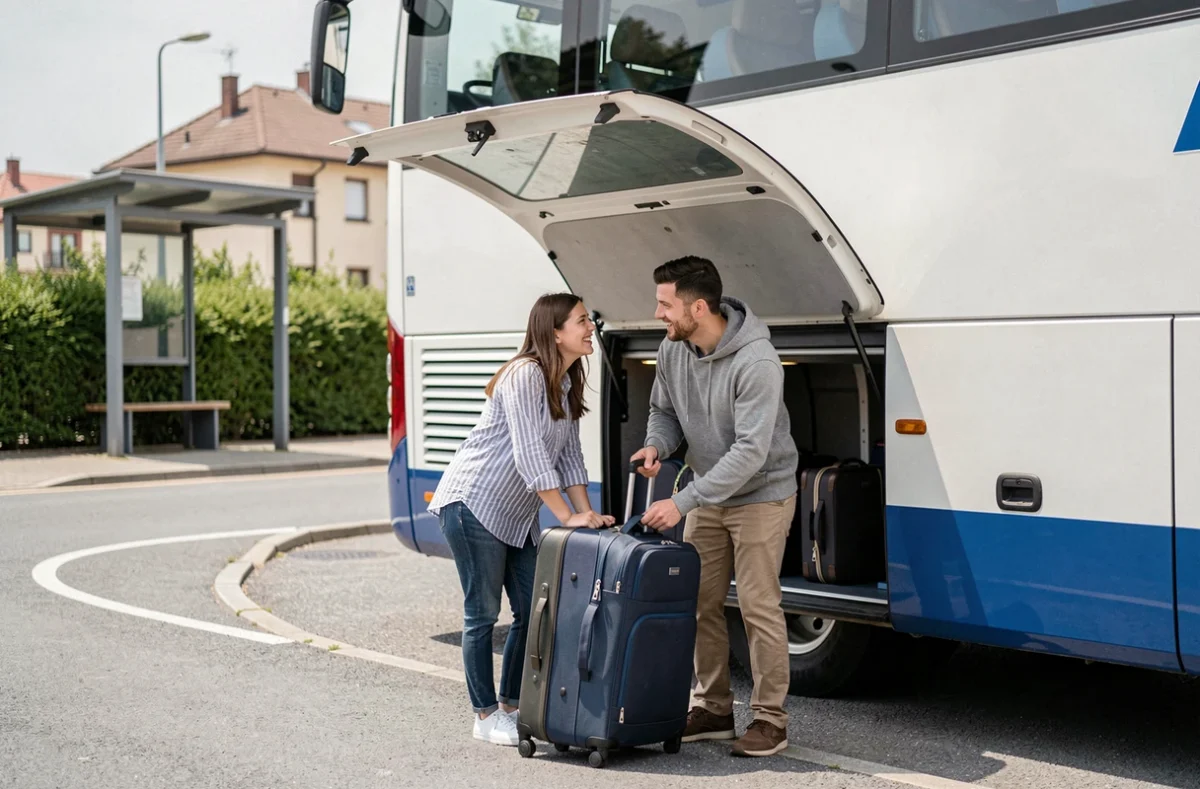
Accessible facilities are not systematically available on all routes or vehicles. Access ramps, wheelchair spaces, boarding assistance: each element must be confirmed with the carrier before purchasing the ticket, especially when transporting a wheelchair, walker, or medical equipment.
Recent initiatives show that the sector is evolving. A modular coach capable of accommodating up to twelve wheelchair spaces has been developed, according to Ouest-France (September 2026). This type of vehicle illustrates a change in approach: comfort is not limited to seat recline or Wi-Fi, it also depends on the vehicle’s ability to accommodate different types of travelers.
For a concerned traveler, the process is simple but non-negotiable:
- Contact the carrier at least 48 hours before departure to confirm the availability of facilities
- Specify the type of assistance needed (boarding, equipment storage, specific location)
- Keep a written record of the confirmation to avoid disputes at departure
Accessibility is not always included in the search filters of ticket comparison sites. A direct check with the operator remains the only reliable method.
Buses remain the cheapest long-distance transport mode for the majority of routes in France. This pricing position holds as long as travelers anticipate the variables that can erode the gap: baggage outside the allowance, delays on overnight trips, unguaranteed accessibility. Comparing offers based on the actual conditions of the trip, not just the ticket price, makes the difference between a good deal and a false economy.